Predictive oncology is moving from "can produce a score" to "can enter the main clinical pathway." In 2026, what separates leaders is not another model—it is whether screening-first queues, explainable stratification, and tumor board evidence packs form a closed loop.
Inflection point one: screening-first queues
High-risk populations and follow-up cases no longer rely on manual chart review. Risk stratification pushes highly suspicious cases to specialty and tumor board prep lists, shortening time to action.
Inflection point two: explainable, not black-box
Department QA and teaching need feature contributions and confidence intervals. Without explanation, AI struggles to earn sign-off trust.
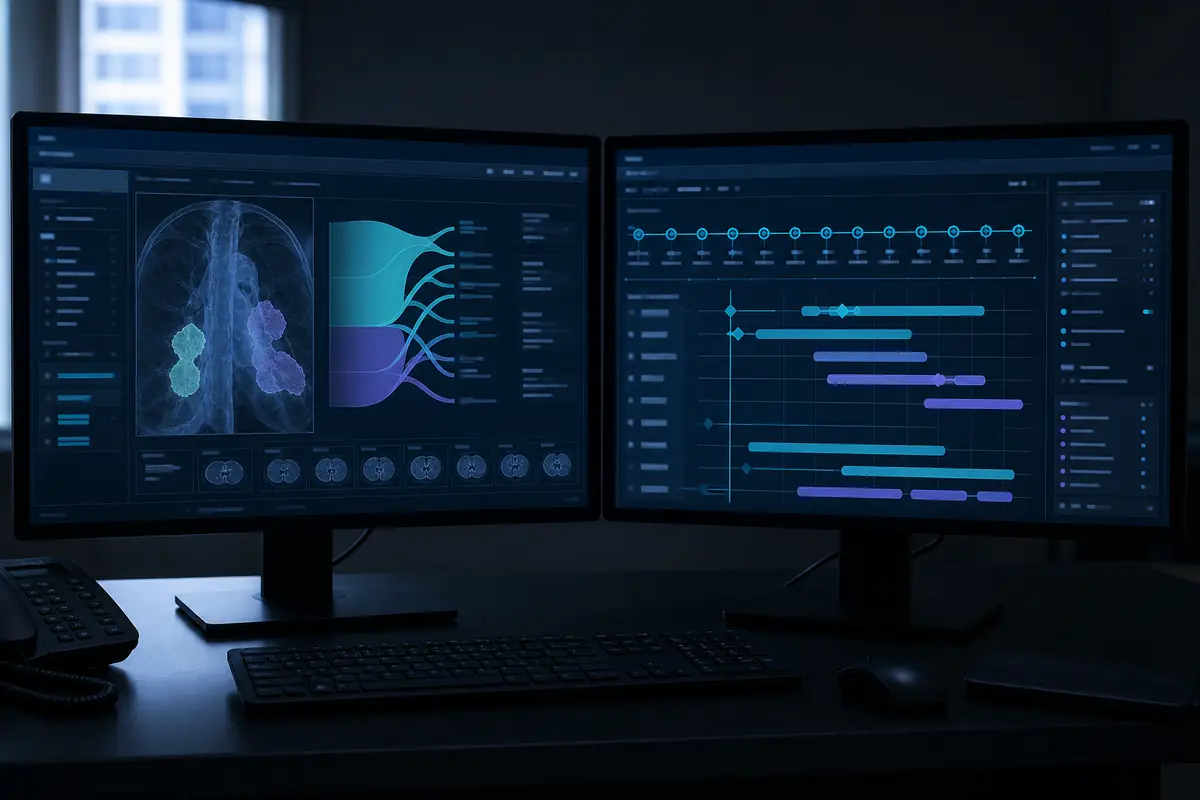
Inflection point three: tumor board evidence packs
Assembling materials the night before tumor board remains costly. Automatically summarizing imaging, pathology, and key findings is what actually speeds preparation.