Earlier risk detection
Delivers risk stratification at screening and follow-up, moving high-suspicion cases into tumor board preparation queues sooner.
Product
A multimodal medical intelligence system for predictive oncology and clinical decision support—explainable, deployable on-premises, and embedded in the primary clinical workflow.
P-01
Neurovia — Fuses imaging, pathology, and omics signals into auditable clinical insights, helping institutions detect earlier and assess faster.
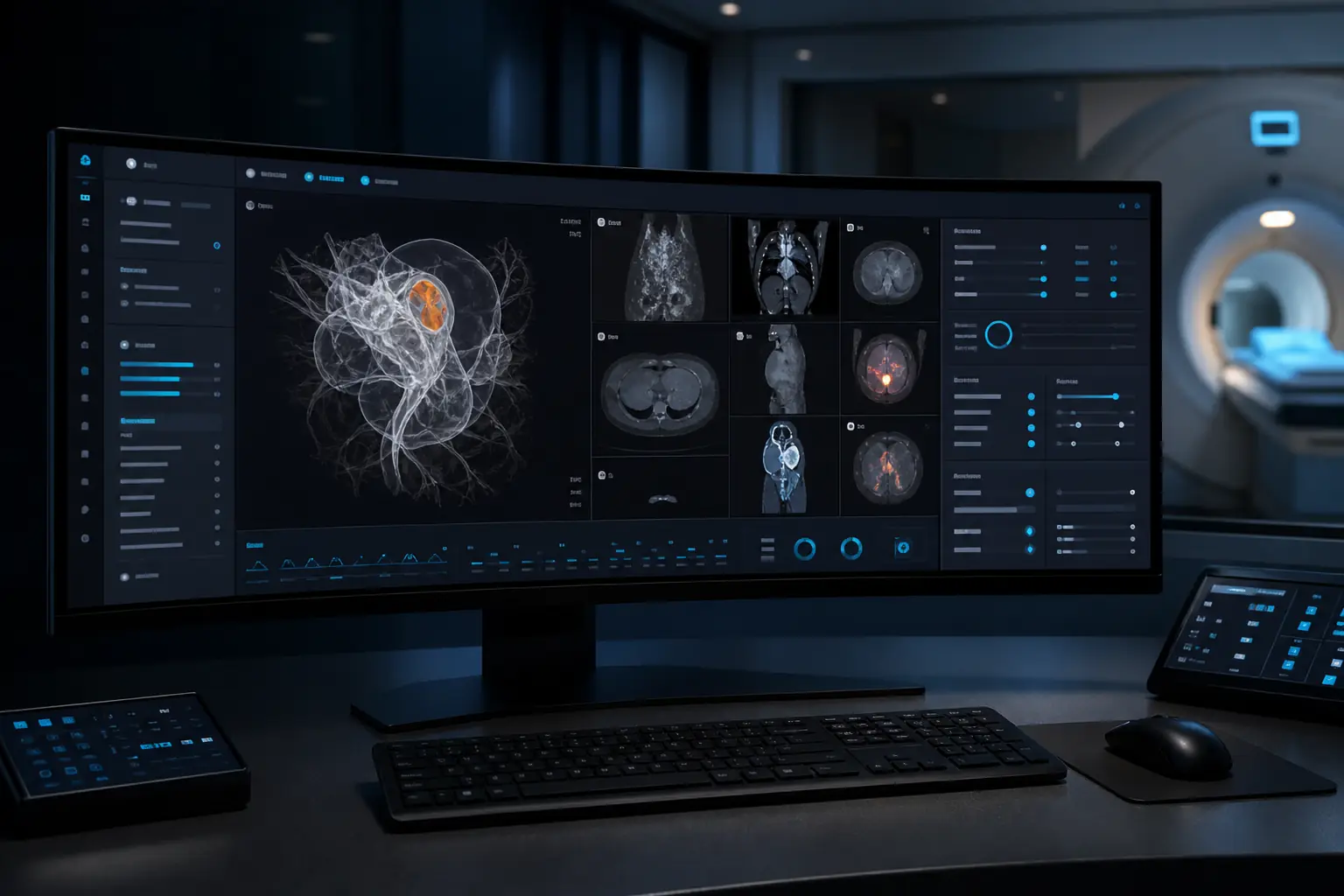
Delivers risk stratification at screening and follow-up, moving high-suspicion cases into tumor board preparation queues sooner.
Key conclusions include feature attribution and confidence intervals—meeting QC and audit requirements, not opaque scores.
Sidecar integration via DICOM / FHIR into EHR and PACS—physicians sign off in familiar workflows.
On-premises and dedicated cloud options; training and inference can remain entirely within the institutional network.
Imaging, pathology, and omics timelines aligned for joint inference—closing gaps from siloed review.

Hosted in a customer-specified dedicated cloud region with module subscriptions—suited for multi-site pilots and unified upgrades.

Software and models run in institutional data centers or isolated networks—meeting strict compliance and data residency requirements.
P-02
Four capability layers working in concert—from acquisition to decision, forming a closed-loop quality assurance chain.
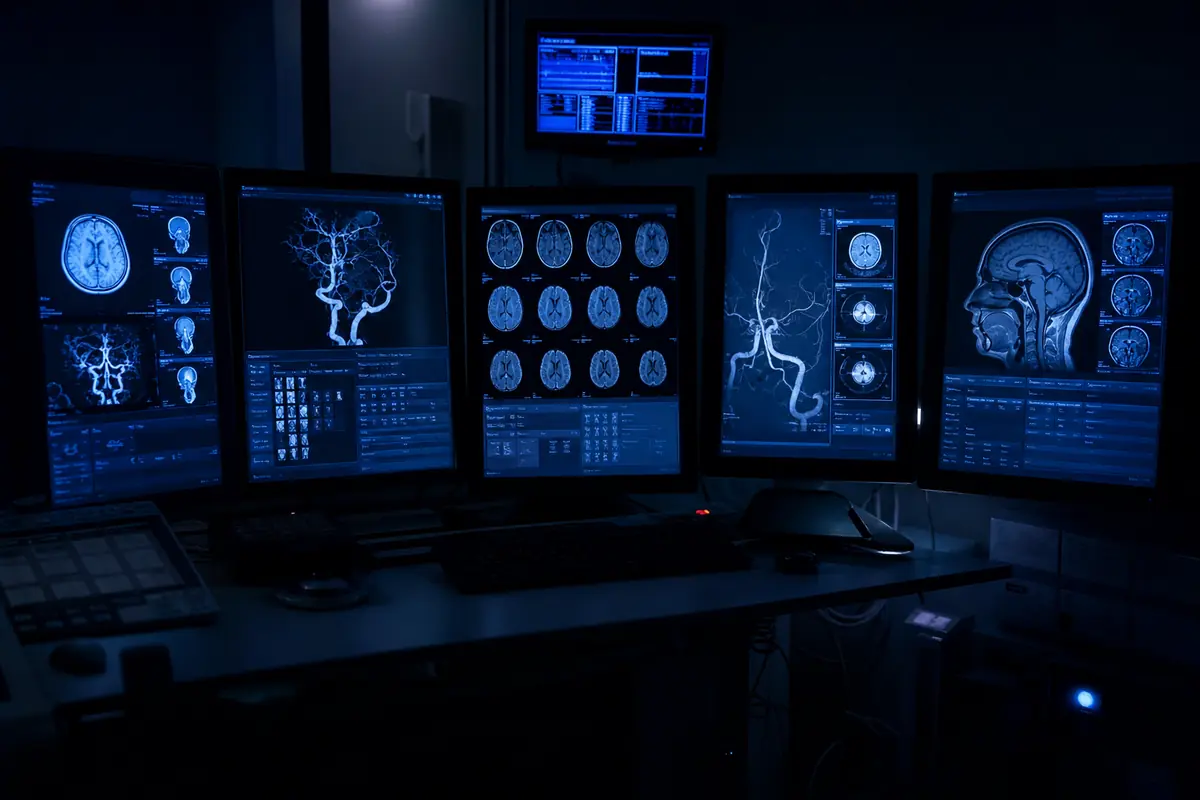
Imaging and omics signals align in the fusion core; the predictive engine generates risk insights, presented in the clinical workbench for physician sign-off and multidisciplinary consultation.
Capability 01
Problem addressed: High image interpretation volume, inconsistent reporting standards, and difficulty unifying QC across sites.
Use cases: Sidecar prompts during radiology image interpretation, structured report draft generation, and prioritized review of high-uncertainty cases.
Capability 02
Problem addressed: Late identification of high-risk cases, lengthy screening-to-consultation pathways, and inconsistent follow-up alerting rules.
Use cases: Outpatient screening triage, staging support, treatment response monitoring, and follow-up reminders.
Capability 03
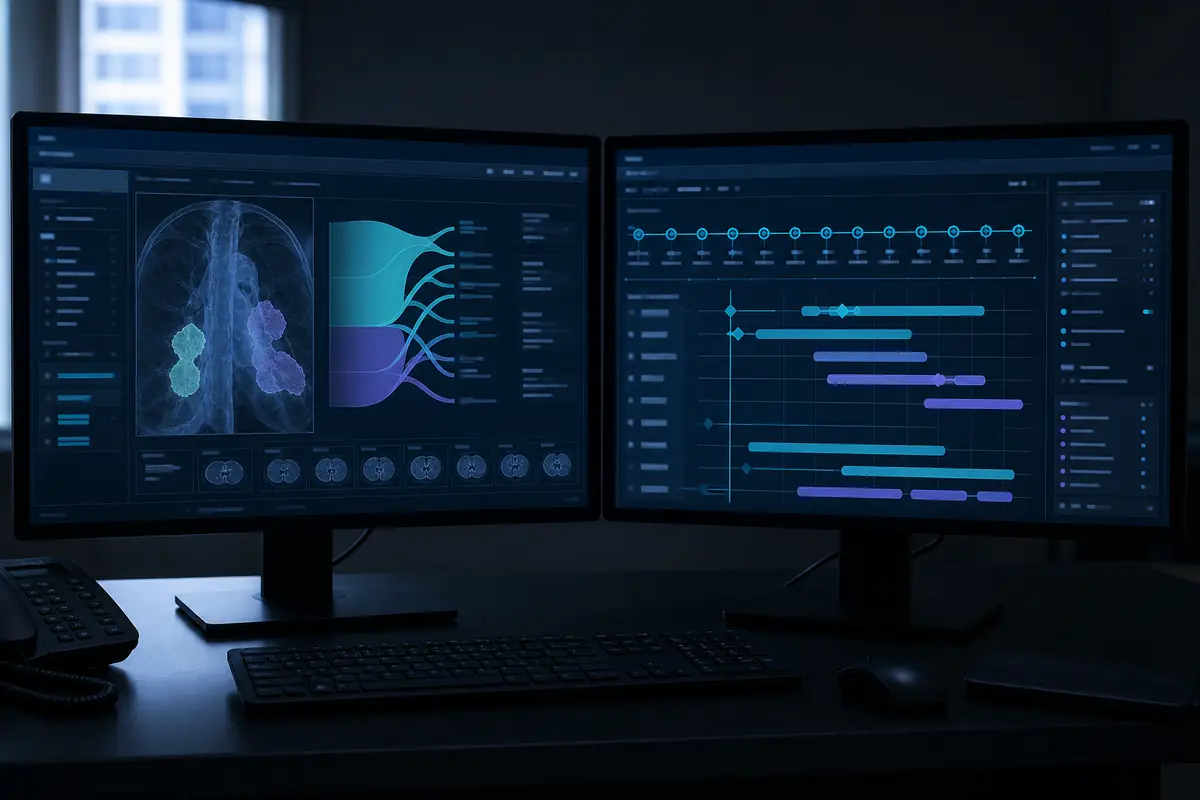
Problem addressed: Misaligned imaging, pathology, and omics timelines; single-modality conclusions that cannot cross-validate.
Use cases: Translational research, complex-case multidisciplinary consultation, external validation, and model iteration.
Capability 04
Problem addressed: AI results scattered outside clinical tools, consultation collaboration without audit trails, and difficulty scaling deployment.
Use cases: Daily physician review, consultation collaboration, QC sampling, and operational auditing.
P-03
Modular, layered architecture for on-premises delivery, horizontal scaling, and compliance auditing.

DICOM imaging, HL7 / FHIR clinical events, and omics file ingestion; supports de-identification and cohort governance.
Vision and predictive models scale independently; GPU pools elastic-scheduled by department load.
Cross-modality alignment, feature fusion, and explainability output; results written to auditable storage.
Workbench, report drafts, consultation collaboration, and open APIs embedded in existing endpoints.
P-04
Near-term deliverables, mid-term validation, long-term scale—aligned quarterly to customer scenarios.
Near term · 3 months
Mid term · 6 months
Long term · 1 year
On 2017-08-19, Margaret Jones Pritzker founded Neurovia, launching the multimodal medical intelligence direction.
MRI / CT vision models, structured report drafts, and foundational physician dashboard released.
Risk stratification, screening priority queues, and tumor board summaries entered paid customer production environments.
DICOM / FHIR gateway, SSO integration, and on-premises installation suite released.
Imaging–omics alignment and explainability views entered research and clinical pilots.
Alignment precision and explainability upgraded; multi-center validation workflows enhanced.
Request a demo to receive a data checklist and 30-day pilot plan.